Virginia Woolf and Solid Houses
I’ve been continuing to read Woolf’s essays and came across a review of Samuel Butler, Author of Erewhon: The Man and His Work by John F. Harris, which was originally published in The TLS in July 1916.
It’s an interesting essay for a few reasons. It captures Woolf’s admiration for Butler, especially compared to his contemporaries. He was, Woolf writes, ‘always busy planting his darts in the flanks of his age'. Butler is also described as being a bit of a crank. On occasion he 'reminds one of those eccentric and insistent people who persist in bathing daily in the Serpentine, or in wearing a greatcoat all the year round, and proclaim that such is the only road to salvation'.
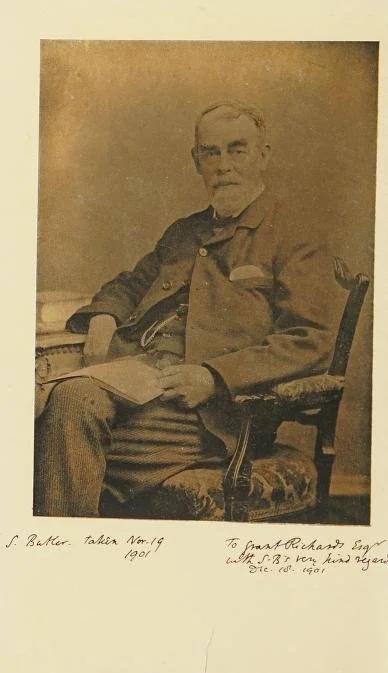
Frontispiece illustration in Samuel Butler, Author of Erewhon: The Man and His Work by John F. Harris (Archive.org)
Woolf thought that Butler would go on being read among future generations (and perhaps this is what led her to position Butler as the forebearer of the modern novel in her essay ‘Mr Bennett and Mrs Brown’). And in this she was wrong. I don’t think Butler is widely read, nor is he a staple of university syllabi or reading lists. Having read The Way of All Flesh for the first time last year, I think it is clear why (and in this respect he possibly shares a fate with George Bernard Shaw). For all of Butler’s acerbic critique of society and decorum, his writing feels mannered in such a way that feels distinctly unmodern compared to, say, Woolf or Joyce, or even someone like Wells. And then there is the matter of what Woolf calls the ‘clog’ or ‘stagnation’ of his plots at times.
What interested me most when reading the essay, however, was Woolf’s ambivalence about John F. Harris’s approach to biography. She describes how he has constructed a 'picture of a man who built up solidly a house with many storeys' rather than the reality of 'an eccentric who took up subjects much at random’.
The insinuation is that this approach to biography is too ordered and rather stolid; the heaviness of the structure seems to threaten to extinguish the life of its subject. There’s an interesting parallel here with the metaphors deployed in her later famous critique of the ‘materialist’ Edwardian writers in ‘Modern Fiction’:
‘[Arnold Bennett] can make a book so well constructed and solid in its craftsmanship that it is difficult for the most exacting of critics to see through what chink or crevice decay can creep in. There is not so much as a draught between the frames of the windows, or a crack in the boards.’
In both cases, the bogey of the solid, heavy house seems to threaten the spirit or subjectivity of the beings contained within (whether that’s biography or fiction). Woolf would later reflect on this further in an essay on the art of the biography, where she would talk about the need to balance the granite of facts and rainbow of spirit or character. That these ideas would have their possible origins (or earliest outings) in a short review of a Butler biography in The TLS that scholars and readers hardly discuss might make us think harder about the origins of some of Woolf’s most famous formulations and arguments.
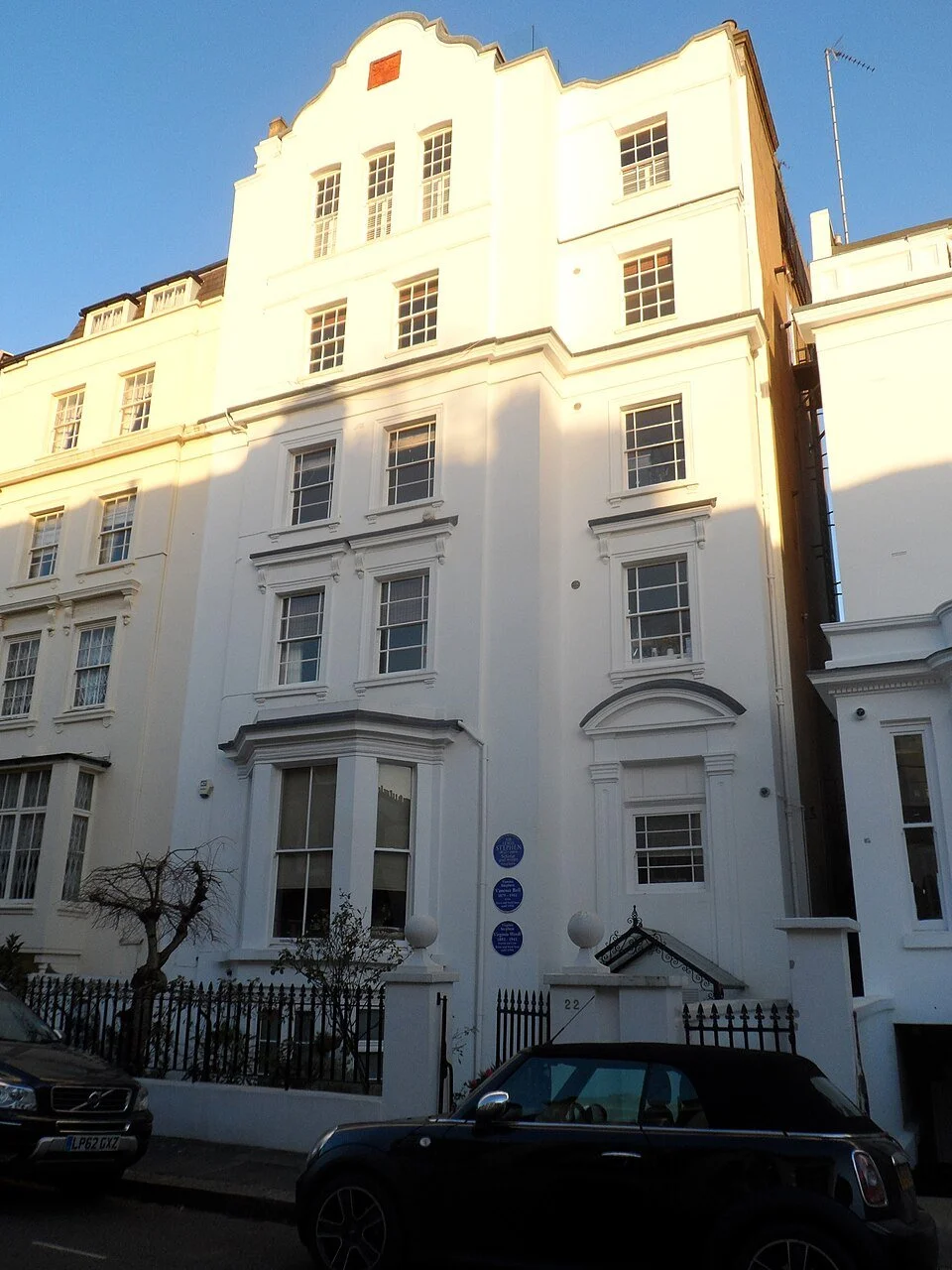
22 Hyde Park Gate, London. The ‘solid house’ Woolf grew up in. (Wikimedia)