Cloaked in Smog: On Re-reading The Lonely Londoners
I read Sam Selvon’s The Lonely Londoners for the first time in February 2012.
I was 24 and in the first year of my degree at the University of Kent, taking a course entitled ‘Readings in the Twentieth Century’.
The lecture, given by David Herd, began not with the usual contextualisation of the author and text, but with a photograph of a brown building topped with grey corrugated roofs and lined with narrow windows surrounded by barbered wire fencing. This, we were told, was the Dover Immigration Removal Centre. Only twenty miles away from where we students were sitting, people were spending their final days (and weeks and months and years) awaiting removal. Years later, I’d drive past the complex, which sits perched atop the chalky cliffs overlooking the Channel, and think back to David’s lecture and Selvon’s book.
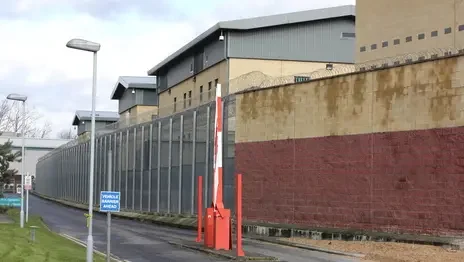
Dover Immigration Removal Centre
This was before the Windrush Scandal. Before the “hostile environment” policy. Before Brexit. But change was in the air. There was a sense that the treatment of refugees was getting worse and that anti-immigrant sentiment, always bubbling away in the background, was on the rise again. David Herd would, in a few years, help to launch Refugee Tales as a kind of response.
Of course, the Caribbean emigres characters in Selvon’s Lonely Londoners aren’t refugees. They are, by and large, British subjects, born in former colonies. But the prejudice they face, and how this prejudice is stoked, is familiar. In the novel’s opening pages, Moses, the novel’s protagonist, spots a newspaper reporter at Waterloo station, reporting on ‘so much Jamaican coming to London’. Moses knows by now that it is newspapers and radios that are responsible for why ‘the English people starting to make rab about how too much West Indians coming to the country’.
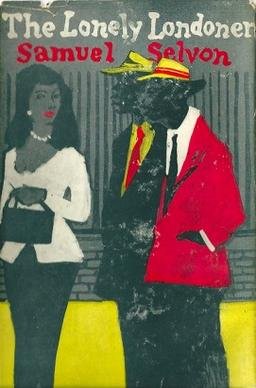
First edition cover design
Reading the novel at 24, the book left me somewhat cold. It wasn’t the language or form, the patois that drifts in and out of characters’ minds, that did it. It was the decentred, picaresque narrative. I wanted more plot.
This time around, I was reading the novel from the other side of the desk, teaching it to second-year undergraduate students. It both was and wasn’t the novel I remembered. In my mind, Tanty had played a much larger role than she does and, as I had remembered it, the description of Captain trying to catch seagulls from his bedroom window for food was more tragic than comic.
Perhaps unsurprisingly, I noticed the animals in the novel much more this time. In particular, I was struck by the clash in sentiment between the West Indians and the English in this respect. The scene where Galahad is driven by poverty and hunger to catch pigeons in Kensington Gardens stands out in particular:
Galahad eye a fat fellar who edging up to the rail. He start to drop bread a little nearer, until the bird was close. He make the snatch so quietly that the other pigeons only flutter around a little and went on eating. He start to swing the pigeon around, holding it by the head, for he want to kill it quick and push it in his pocket.
As aforesaid, that particular season it was as if the gods against the boys, and just as Galahad swinging the pigeon one of them old geezers who does always wear furcoat come through the entrance with little Flossie on a lead, to give the little dear a morning constitution, and as soon as Flossie spot the spade she start a sharp barking.
‘Oh you cruel, cruel beast!’ the woman say, and Galahad head fly back from where he kneeling on the ground to handle the situation better. ‘You cruel monster! You killer!’
Galahad blood run cold: he see the gallows before him right away and he push the pigeon in his jacket pocket and stand up, and the pigeon still fluttering in the pocket.
‘I must find a policeman!’ the woman screech, throwing her hands up in the air, and she turn back to the road.
Galahad has transgressed the sacred pact of the English park, where animals are exercised and observed but not hunted nor slaughtered. That takes place elsewhere. Eating animals in the wrong way is a crime punishable through the law.
That park, along with the rest of London, the narrator tells us, is cloaked in fog. In fact, from the first page onwards the London we get in Selvon’s novel is suffocating in smog, that lethal combination of smoke, other airborne pollutants and fog. It wraps itself around Selvon’s Londoners, seeping into their porous bodies. This is the era of the Great Smog of London (thought to have killed over 10,000) and West Indian migrants are especially vulnerable to it. They labour on the jobs that no one else wants and their living conditions are squalid and cold.
I’m not the only one to have noticed that Selvon is unusually attuned to London’s climate. As I was re-reading the novel, Modernism/modernity published an article by Saba Pakdel exploring the connection between blackness, abjection and smog in the novel. As Pakdel argues, Selvon shows how migrants were seen as ‘polluting’ England at the same time as the smog was suffocating its cities.
It would be tempting to read the novel through the lens of what Rob Nixon famously described as ‘slow violence’. And I think that such an approach would be justified (and possibly yield further insights). But, it is also a novel of joy and pleasure - something which I did remember from my first encounter with it. It is a novel in which Caribbean fetes are transposed to London’s dance halls, where oil drums are played (oil being another untapped feature of the noble’s unconscious) and the lonely are brought together. In which food provides pleasure and meaning. In which sex, transgesses racial divisions and opens up new forms of excitement and even hope (albeit from a decidedly male perspective). As the final line in the novel frames it, London on a summer evening can make you feel that ‘if you wasn’t making love to a woman [...] you was the only person in the world like that.’